he reason behind the cut in policy rate seems to be a slowing economy

'If rate cuts happen, bond yields will come down and investors will make mark-to-market capital gains on them.'

Finance minister Nirmala Sitharaman on Wednesday exuded confidence that inflation would further decline and the government is on track to meet its budgetary target for deficit and said that there is no fear of stagflation in India. Replying to the debate on first batch of Supplementary Demands for Grants 2022-23 in Lok Sabha, the finance minister said inflation has come down and it is now in the tolerable band of the RBI. Inflation has been declining since April 2022 and it is declining further, she said.

The central bank can directly print money and finance the government, but it should avoid doing so unless there is absolutely no alternative, former RBI governor D Subbarao on Wednesday said while pointing out that India is 'nowhere' near such a scenario. In an interview with PTI, Subbarao suggested that to deal with the second wave of COVID-19 induced slowdown in the economy, the government can consider Covid bonds as an option to raise borrowing, not in addition to budgeted borrowing, but as a part of that.

'They can transition from short to long-duration funds when the yield curve normalises.'

Experts have started giving comments on provisions that the govt must make in Budget 2016-17.

The S&P BSE Sensex shed 119 points to close at 27,977 and the Nifty50 dropped 45 points to finish at 8,591.

RBI will take a cue from the Fed policy statement.

Will Arundhati Bhattacharya be the RBI's first woman governor? Or will Urjit Patel succeed Raghuram Rajanas RBI governor when his term ends on September 4?
He will be the first bureaucrat to head the central bank in almost five years.

He has had a productive first year at the RBI -- one which saw, also, India's economic imbalances improve and the unexpectedly strong general election outcome.

The Reserve Bank of India has set up an experts committee to implement Basel II accord by 2006 to strengthen the financial health of banks by adopting globally accepted norms for capital adequacy.

During the month, inflation in vegetables shot up to 35.99 per cent, as against 26.10 per cent in October. Likewise, the prices of cereals and eggs grew at a faster pace of 3.71 per cent.
Seeking to dispel possible notions of the RBI not having done enough by opting for a pause for the second consecutive time, Das said the RBI has a wide dashboard of instruments beyond rates that can be deployed.

With a sole mandate of inflation targeting, RBI wears many hats.

RBI lowered economic growth for the current fiscal to 6.9 per cent from the previously projected 7.1 per cent, but saw it bouncing back in a big way to 7.4 per cent in 2017-18.

However, it may still not change its stance on the policy rate as inflationary pressures are coming from high commodity prices.

The bond market expects at least 25 basis points cut in the June 6 policy.

If indeed we want the board to manage the RBI, probably the government should take a close look at the US Federal Reserve system which has a two-part structure - a central authority in Washington, DC, and a decentralised network of 12 Federal Reserve Banks located throughout the country, says Tamal Bandyopadhyay.
Instead of a rate hike, or even a pause, there could be a window for the RBI for an interest rate cut

TCS, Bajaj Auto, Adani Ports and Cipla were the top gainers on BSE Sensex while Coal India, GAIL, Dr Reddy's and Infosys lost the most on the index.

The career bureaucrat-turned-central banker walked into the 19th floor corner room of the Reserve Bank on December 12, 2018. Since February 2019, the Das-led RBI has cut the repo rate by a whopping 135 basis points to support the sagging growth, including an unprecedented 35 bps reduction in August. As he completes one year at the helm, woes in the NBFC sector, overall health of the banking sector and steeply falling economic growth are among the major challenges that needs to be tackled sooner than later.
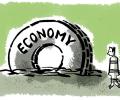
As he projected a grim outlook for the economy, RBI Governor said that amidst this encircling gloom, agriculture and allied activities have provided a beacon of hope on the back of an increase of 3.7 per cent in foodgrains production to a new record.
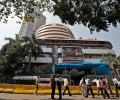
There were more than three losers against every gainer on BSE

FPIs, which are holding large exposures in Indian debt, could also be expected to book some capital gains as yields slide down

Backloading the government's borrowing programme suggests the finance ministry's confidence in better revenue numbers, says A K Bhattacharya.
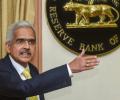
Central banking is a science, not an art, Tamal Bandyopadhyay tells RBI Governor Shaktikanta Das.

Rumours in the bureaucracy on his successor include the names of Sajjid Chinoy of JP Morgan, Rathin Roy of the National Institute of Public Finance and Policy, Neelkanth Mishra of Credit Suisse and the principal economic advisor, Sanjeev Sanyal.

SBI is the first major state-run bank to hike lending rates after short-term rates rose as a result of the Reserve Bank of India's liquidity tightening moves announced in July.

Banks have issues with their balance sheet profiles, say PSB executives.

Chaos in Parliament threw a spanner in the government's efforts to revive the economy and kick-start reforms.

"I am an academic and I have always made it clear that my ultimate home is in the realm of ideas," Rajan said in a letter to staff.

Stressed MSME borrowers would be eligible for restructuring of debt, if their accounts were classified standard.

Economists and investors want RBI to retain independence in setting rates
As a result, the forecast of eight per cent retail inflation by January next year looks achievable.
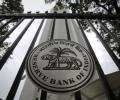
Some say the MPC will raise the rate, while others are of the view that there is already de facto interest rate tightening through rising bond yields, which might prompt the central bank to go for a pause.

RBI said inflation in the second half of the current fiscal is projected at 2.7-3.2%. It retained its GDP forecast for the current fiscal at 7.4%

The Reserve Bank of India unexpectedly raised its policy interest rate on Tuesday by 25 basis points (bps) but said that if consumer price inflation eases as projected, it does not foresee further near-term tightening.

To cut interest rates, the central bank head has to open up a debate on inflation target revision.
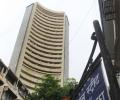
An action on the rate front is unlikely to figure in Rajan's plan for the moment.
